CB Samet is here to tell us about Olympian Awakenings Trilogy, Greek mythology, urban fantasy romance.
There's also a great giveaway.
____________________
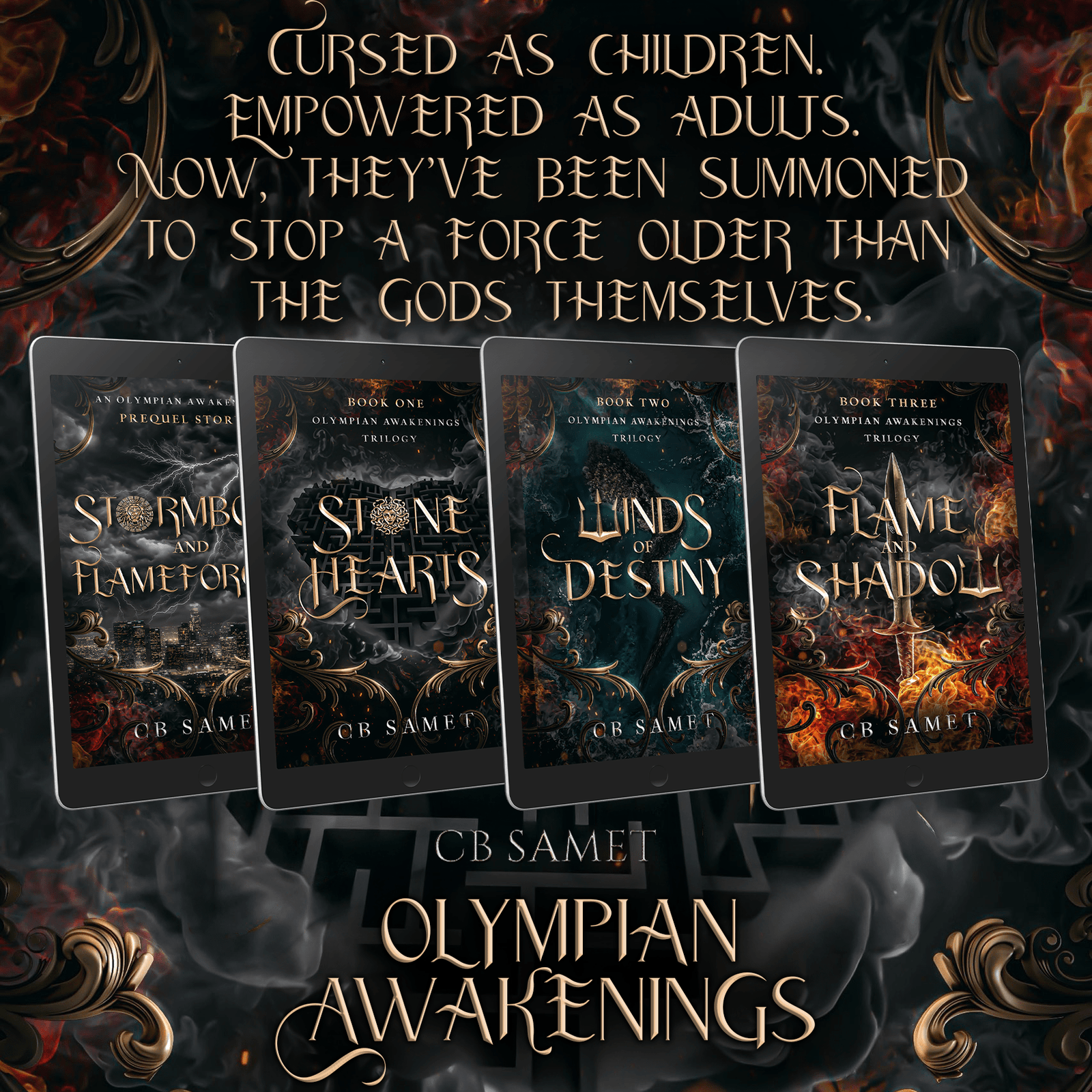
Cursed as children.
Empowered as adults.
Now, they’ve been summoned to stop a force older than the
gods themselves.
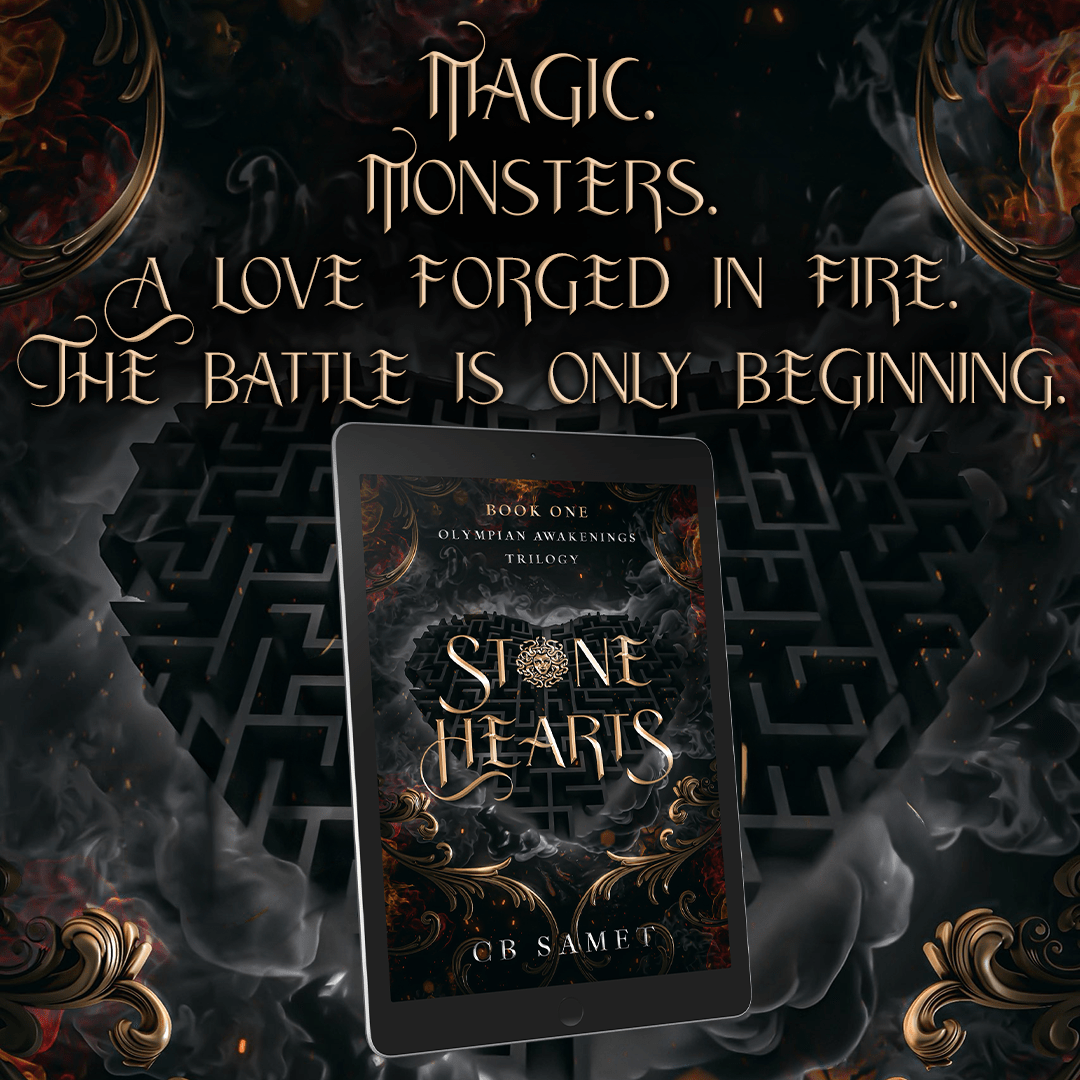
Stone Hearts
Olympian Awakenings Trilogy Book 1
by CB Samet
Genre: Greek Mythology Urban Fantasy Romance
Madison was cursed to
destroy with a glance—until a prophecy calls her to fight beside the one man
who sees through her walls… and into her heart.
Cursed to turn the living to stone, Madison has spent her
life avoiding others—until a prophecy drags her to Greece to join a team of
strangers to help stop an ancient evil. Among them, she meets Rex, a
battle-scarred archaeologist with the power to heal and secrets of his own.
Together, they must survive deadly skirmishes, outwit
mythical creatures, and recover the Armor of Achilles from the heart of
Daedalus’ labyrinth.
The deeper they go, the more the maze twists not just the
path, but their minds.
Failure isn't an option. Succeeding might cost them
everything.
Magic. Monsters. A
love forged in fire. The battle is only beginning.
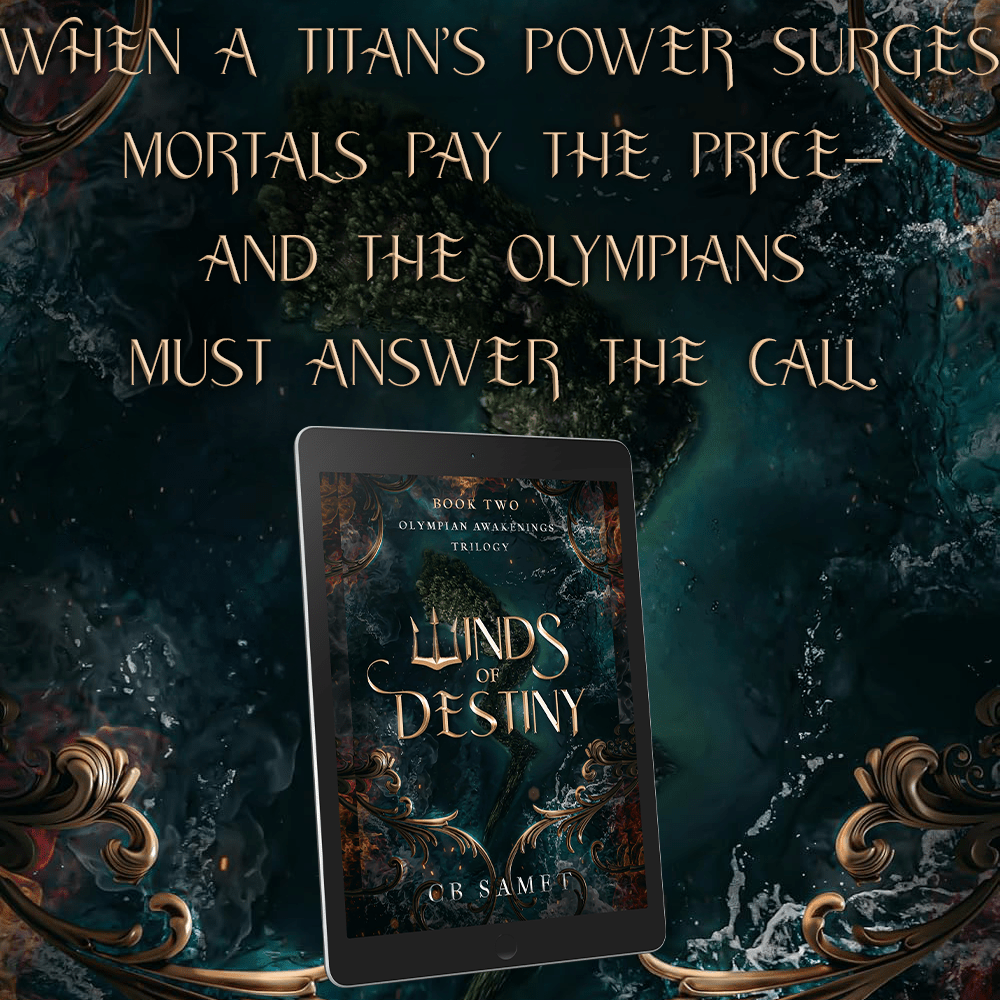
When a titan’s power
surges, mortals pay the price—and the Olympians must answer the call.
Layla, Tyler, and the other Olympians are thrust on a
perilous quest across the Mediterranean and into the sunken heart of Atlantis
to reclaim Poseidon’s trident. Their sea voyage is fraught with danger with
deadly monsters and diabolical magic at every turn. Only by learning to
trust—and love—each other can they hope to survive.
Layla’s storm powers are tied to her heart, and to master
them, she must first confront the emotions she’s spent years guarding. Tyler, a
shapeshifter whose might can rival the fiercest beasts, may be the key to her
control—but breaking through the walls around her heart won’t be easy. Their
past mistakes still linger, and some wounds run too deep for even the strongest
powers to heal.
Adventure, danger, and passion collide in this electrifying
continuation of the Olympian Awakens series.
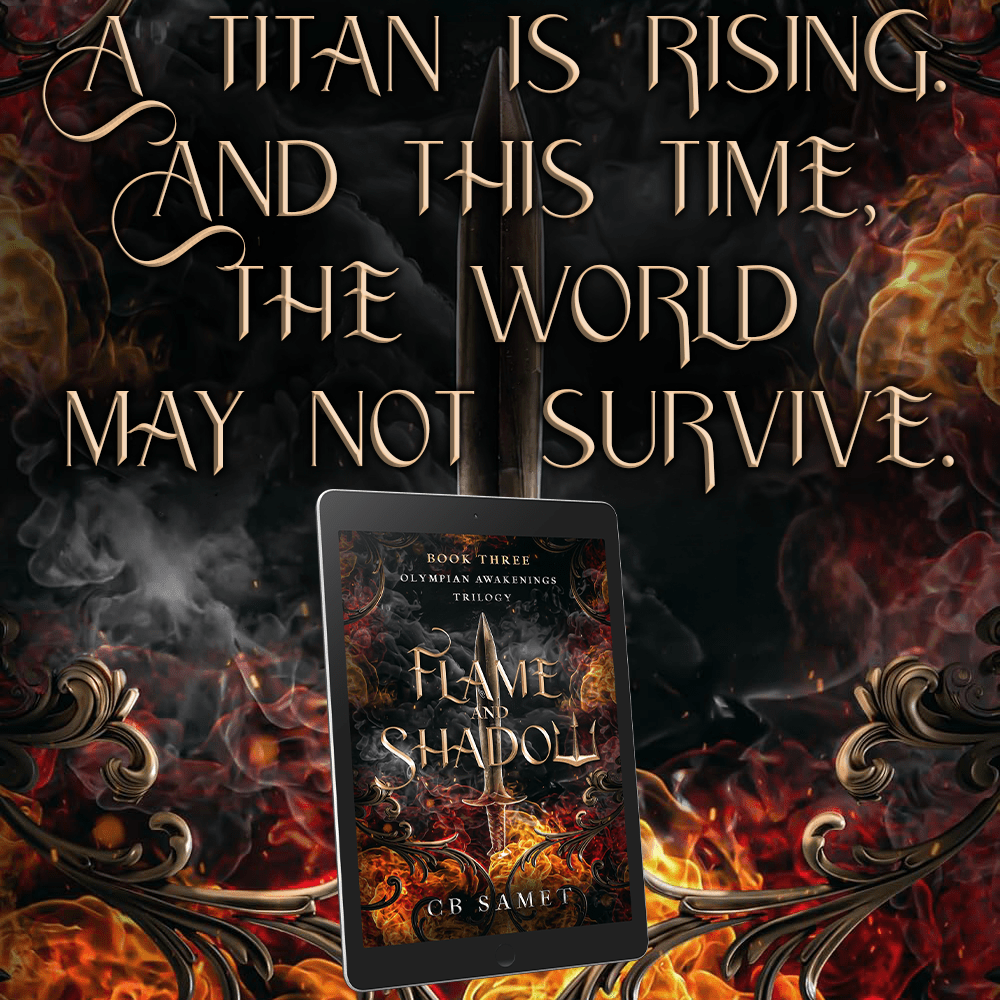
A titan is rising. And this time, the world may not
survive.
Fire-wielder Zoey has spent her life afraid of her own
power. Ancient soldier Alexios has spent centuries believing he was nothing
more than a weapon. Together, they’ve survived monsters, gods, and impossible
quests—but nothing prepares them for Kronos’s final move.
As fractures tear open between worlds, monsters pour into
the mortal realm and the boundary between life and death begins to collapse.
When a desperate sacrifice strands Zoey in the Underworld itself, ancient
warrior Alexios must defy gods, fate, and death to bring her home—before she
loses her memories… and herself.
The final battle will demand everything from all six
champions who have fought side by side: fire and storm, stone and steel,
courage, sacrifice, and unbreakable trust.
Because defeating a Titan will take more than power.
It will take a family forged in battle—and two souls willing
to burn for each other and the world they refuse to lose.
The explosive
conclusion to the Olympian Awakenings trilogy delivers epic Greek mythology,
found family, and a sweeping romantic finale where love and legend collide.
Zoey has always felt the burn of something more beneath her
skin—an untamed fire that refuses to be extinguished. After years of hiding her
power, she’s finally found belonging and a chance to be normal… as a stunt
double on a Hollywood set.
Layla is the picture of grace and fame, a star with a global
following. But behind the camera, she’s hiding a dangerous secret: she can
control the weather.
When a monstrous creature straight from myth attacks during
filming, Zoey and Layla are forced to reveal their powers—and discover they’re
not alone. Chosen by ancient forces, bound by a forgotten legacy, the two women
must join forces to face a truth that will shatter everything they thought they
knew.
Because the world is on the brink of chaos.
And this is only the beginning.
Christina is a four-time award winning author in thriller,
romantic suspense, and fantasy. She is a mother of two energetic boys. She
is a lover of suspense, adventure, and happy endings. She writes action and
adventure in fantasy, thrillers, and romantic suspense genres. Her novels have
empowered women overcoming powerful obstacles and the strong men who support
them.
Favoritequote, ‘She needed a hero. So she became
one.’ --Robin Reed
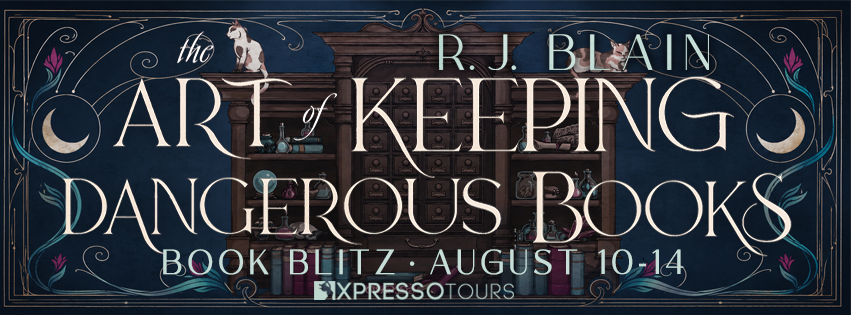
R.J. Blain is here to tell us about The Art of Keeping Dangerous Books, The Apothecary's Secret #1, fantasy, urban fantasy.
There's also a great giveaway.
_____________________
The Art of Keeping Dangerous Books
R.J. Blain
(The Apothecary’s Secret, #1)
Publication date: July 6th 2027
Genres: Adult, Fantasy, Urban Fantasy
To master the art of keeping dangerous books, one must learn the golden rule: some knowledge should never be shared.
Bookshop owner by day, restorer of rare and dangerous books by night, Kita James is thrilled to acquire a new poisonous book from the Victorian era. From the swirling patterns on the cover to its unusual leather binding, IN SEARCH OF LIFE is truly a unique find. However, testing of the vibrant tome reveals its darker nature: the leather is that of a human along with an extinct animal from the ice age. To further complicate matters, a new radioactive element is discovered lurking within its pages.
The deeper she delves into the toxic text, the less she likes about what she learns. From the dawn of humanity, people had searched for the secrets of eternal life and resurrection. And if Lugalbanda-Alad, the author of the mysterious volume, was to be believed, he had found it.
Joining forces with Dav, a rather vocal book in her collection, Kita works to unveil the apothecary’s secret. With the right magic and a strong enough will, the forbidden lore might be able to set Dav free along with the other sentient books confined within her shelves.
But all knowledge comes at a price: if IN SEARCH OF LIFE were to fall into the wrong hands, it could usher in the destruction of all Kita holds dear and the enslavement of all mankind.
Copper, when mixed with arsenite or its equally toxic cousin acetoarsenite, created a vibrant green. Some dubbed it Paris green. Some preferred the name emerald green. No matter what one called the pigment, it remained a silent killer of those foolish enough to handle it for long.
It had come as no surprise to me, when I first began learning the art of keeping dangerous books, that nobody knew for certain how many had died to the beautifully lethal covers and the pages they contained. One confirmed mortality from the pigment had involved a floral arranger specialized in artificial blooms by the name of Matilda Scheure, and she had breathed in the substance on a daily basis while going about her work.
The Victorians had adored brilliant shades, and they had unwittingly sickened themselves with color. Mercury, in the form of the vibrant vermilion pigment, could bring about madness among other things. Lead, offering shades from pristine white to fiery reds and oranges, sickened in a myriad of ways. Then there was cadmium red, which had limited toxicity unless handled often.
I marveled over how the Victorians had managed to discover so many shades of toxic pigmentation.
Within the walls of my personal library, tucked behind a secret door in the back of my bookshop, I owned books of every hue from every era I could get my greedy hands on. I’d outgrown my single shelf of emerald hue years ago, and the toxic volumes now consumed an entire wall. Each color of the rainbow offered some new and interesting way for someone to perish should they fail to handle my collection with care.
To the few who knew of my art, I offered a glimpse into a dark past decorated with a glorious veneer, one willing and able to kill at a single mistake.
I charged a reasonable amount for access to specific volumes of my archive, making use of a different room on the other side of the bookstore for those sessions. I required waivers, and I even had an agreement with an insurance company so I held no liabilities should they be sickened from the inappropriate handling of any one of my pieces.
The waivers eliminated my personal risk, as I refused to hold responsibility for the stupidity of others.
But the colors I held in safekeeping were not, by far, the most dangerous of the volumes.
Knowledge had become power, and I safeguarded all from the deepest of darkness and the brightest of light, for both, when used inappropriate and to their extreme, caused equal harm.
A little after midnight, after closing my cash, locking the doors, cleaning up the self-serve coffee machine, and otherwise preparing for yet another grind in the morning, I retreated to my sanctuary. Most of my work—and all of the magic—took place in the ten by ten closet with a ventilation fan installed, which piped through a series of specialty filters to keep any fumes or residue from making it outside. Those filters would cost me my sanity one day.
They needed to be cleaned or replaced every three weeks, and failure to do so ran the risk of making me the next victim of my collection.
The latest tome to be tamed waited within a glass box on my desk, and it was a marvel of toxicity, magic, and lore, most of which society would deem forbidden if they knew it existed. Thus far, nobody had unlocked the secrets of raising the dead, but the author of the volume had gotten uncomfortably close.
With the right materials, skills, and incantations, the dead could walk again, puppets for the book’s owner to control.
On the outside, it seemed harmless enough for those who lacked knowledge of dangerous books. Swirls of bright reds, oranges, and white decorated the spine with stamps of vibrant emerald green declaring the book to be titled In Search of Life. Everything within had been penned with a careful hand, and a date on the first page declared it to have been from the year 1725, over a hundred years before the popularization of the toxic tomes made famous in the Victorian era.
In 1725, magic had not yet been acknowledged, although society had always told tales of witches and arcane arts in hushed whispers.
In Search of Life, should I be able to authenticate it, would once again change the timeline on humanity’s introduction into practical magics and the role of superstitions in protecting from malevolent incantations. But as was the nature of my work, if all went well, only I would know.
The knowledge held within the pages, which defied time and refused to turn brittle, was best kept a secret.
Author Bio:
RJ Blain suffers from a Moleskine journal obsession, a pen fixation, and a terrible tendency to pun without warning.
In her spare time, she daydreams about being a spy. Her contingency plan involves tying her best of enemies to spinning wheels and quoting James Bond villains until satisfied.
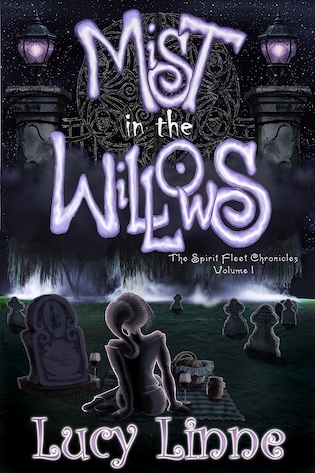
Lucy Linne is here to tell us about Mist in the Willows, Spirit Fleet Chronicles #1, gothic, horror, urban fantasy.
There's also a great giveaway.
_______________________
Mist In The Willows
Lucy Linne
(Spirit Fleet Chronicles, #1)
Publication date: August 25th 2025
Genres: Adult, Gothic, Horror, Urban Fantasy
Discharged unexpectedly from the British military at the peak of her career, Jade Palmer must find a way to rebuild her life. Haunted by strange nightmares and fragments of her own fractured memories, Jade finds herself thrust among unfriendly family and unfamiliar friends. Her only comfort is in the cobbled streets, quaint cottages and winding river paths that hold the happy echoes of her childhood.
But in the local cemetery, older than living memory, a strange mist rises among the willows in the depths of the night… and with it, a vengeful entity that seems to stalk Jade’s every footstep with terrifying purpose.
Alongside her faithful dog, Cannelloni, and wild-child sister, Leela, Jade must fight once more—braving a tangled journey through ancient supernatural lore, and the depths of her own hubris, to protect those she loves.
For the dead have truths to tell… and their retribution comes as cold as the grave.
Mist in the Willows, the first entry in the Spirit Fleet Chronicles, is a chilling and cozy gothic novel about loss, cupcakes, annoying family, mysterious steampunk strangers, and the ways in which violence may haunt us all.
The first time I heard the chilling whisper calling my name, it came from Grandad’s old analogue radio.
I was unpacking the five sad-looking boxes containing all my worldly belongings and didn’t pay much attention. Dad stored them in his basement, and spiders were crawling out of every corner.
When I picked up my phone to check for messages, a mega-arachnid scuttled on eight hairy legs along my fingers. It had insidiously blended in with the black case of my mobile and became invisible. Now it took up most of the screen. I dropped my phone on the coffee table and spotted its mate, the same incredible size, scampering across the floor and under the couch. At least Grandad went to bed early and didn’t see this infestation I’d brought to his cherished houseboat.
I ran from the lounge to the open plan kitchen and grabbed a glass to trap the intruders.
As I passed by, the radio on the windowsill abruptly switched to a hoarse faltering static.
The music returned as I shook the glass out of the barge door, tossing the eight-legged giant, into the grass by the river path. The other one, nowhere to be found. I regretted trying to trap and release them. I would have rather squashed them with my hiking boot. But cleaning bug goo off the floor is a task I will avoid where possible. A flamethrower would be ideal but I’m out of those since I’m back home. So, the spider got to live another day.
As I rinsed that glass to put it away, I noticed it.
Wait a minute? What’s going on with the radio?
Standing beside the little radio, where it sat since my childhood, gathering dust on the windowsill, I listened to the static.
It had a quality about it that I found almost obscene. It sounded alive, fluctuating from deep cavernous whispers to a strange whistling. I fled the kitchen when it pitched that abominable screech of steak knives against dinner plates.
The static immediately faded away, returning to Grandad’s favourite sixties rock radio station. Back in the lounge, I punched a pile of empty boxes flat to bin them. Not that I wasn’t glad the static stopped. But something about the way it had switched so fast bothered me, as if it knew I had moved away from the radio.
Moments later I returned to the kitchen. The music shifted to static in an instant. I stood next to Grandad’s ancient kettle, plugging in my coffee maker, a survivor since my student years in the dorms.
How could it be so loud and not wake up Alan?
Its pulsing tones surged, like the call of a bottomless pit, then lulled to a sinister hum at the very edge of hearing. Every time it came, I cringed, as if plunging into neck deep water with ice cubes bobbing all around me.
Before I knew it, I had crossed the room and stood with one hand on my dog’s collar.
“You don’t like it either, huh? Good boy,” I said, as Cannelloni sat back down among the window seat cushions. The static melted away behind me, the music replacing it. Cannelloni tucked his head in his paws again with a huff.
I glanced back at the old radio. Had it sounded a bit like whispers in some guttural language? Surely, I was over thinking it. It could be nothing but static.
I headed for the desk to start my Wi-Fi set up, hoping to stream a movie and chill after the gruelling day, moving in with Grandad. And most importantly, to make sure her messages would come through on a stronger signal.
I reached and patted my cargos’ pocket, the little one with the zip on my hip. It was still there: I felt the round shape of her compact mirror. The only thing I have of her, until we meet again.
I felt better. There are good things in the world, and good days ahead.
As I pulled up the lid of my laptop, in the split second before the dark screen lit up, your face flashed at me.
It’s only been happening in the last few years or so, that my reflection startles me, looking like you. I’ve always had your impossibly thick and straight, dirty blonde hair. And your bushy brows over cobalt blue eyes. But most of all, in my late thirties, I’m now your age. The way I remember you. You would be much older today but if we could somehow meet, across death and time, both aged 38, we’d look like twins. Anyway, it only lasted a fraction of a second, and then the desktop lit up and I was looking for a movie right away.
Ten minutes later, I glanced suspiciously at the radio. Nothing.
Twenty minutes later, nothing.
Halfway through an outbreak of a superbly gruesome zombie apocalypse, I still couldn’t stop thinking about the static. Was I causing it? It only happened when I neared the radio.
Run a test?
I hesitated. So many other things to worry about at this moment. Why did I even care if the songs were interrupted a few times?
Because of how freakin weird this noise sounded.
I paused the movie, resigned to my curiosity. I edged along the back of the loveseat towards the kitchen. The music staggered as I reached the counter. Just to pretend to myself I didn’t come to test the radio, I reached out and grabbed a handful of cookies from the doggie jar.
The static soared.
Sounded like a cold gust whistling savagely out of a black chasm. Then dulled to the throaty whisper of an unsettling breeze through dead leaves. That did it. I got the hell out of the kitchen.
Joining Cannelloni at the window seat, I felt an unreasonable amount of relief that the music returned on the radio. Cannelloni thought so too. He gave such a profound growl he even startled me a bit. He bared his teeth at the kitchen. Not like him at all.
“Don’t worry, just a funny noise!” I said, letting him slurp the cookies on the palm of my hand. My gaze wandered back to the spot I had been standing.
A funny noise that comes only when I’m close to the radio. But how close, exactly?
I stood up, arms crossed and edged to the back of the couch marking the end of the lounge, not quite entering the kitchen.
“Ok Cannelloni let’s see, one step. Two steps, three…”
The music faltered. I stopped moving.
I leaned back as far as I could go without shifting my feet. The music flowed. I chuckled.
Not because I wasn’t scared. More like, because I was getting too scared.
Then I leaned forward.
The music faltered.
I tried to hold my balance, bent as far as I could reach like some demented yoga teacher who forgot which warrior pose they were demonstrating. A sudden fear, out of nowhere.
Rivulets of crimson streaking dry sand. Something solid in the blood. Glistening strips of sinew. Twitching on the red mud. Not again!
The gaps in the music, for some reason, flashed images from my nightmares in my mind.
I straightened up. This wasn’t funny anymore.
I’m good at pushing the memory of the nightmares away during the day and focusing on my work and everything else I have to worry about. This bloody radio thing was getting on my nerves.
I jumped with a yelp as a sharp pinch came from behind my left knee.
“Cannelloni! What are you doing?”
The dog had bitten hard into my trouser leg and was pulling at it. As if he wanted me to leave the kitchen.
“Aren’t you clever,” I said, disentangling myself and coming to sit with him by the window seat. “It’s ok, I’m staying here, you can snooze again!” I scratched under his ears until he turned around full circle on his cushions and plopped in the comfiest spot.
At least I know. It’s about four steps into the kitchen.
That would mean I can’t reach the counter without setting off the weird.
But I was done experimenting. Hated the way the static made me feel, and what it did to my dog too.
This boy, the only good thing about this new, civilian life, was normally a big bundle of cuddles. At the moment he looked perturbed, ears twitching. Cannelloni’s natural state was passed out, belly up, and fast asleep on his giant plushie bed. Ever since I brought him here from the shelter after Easter, he acted as if Grandad ’s houseboat has always been his rightful kingdom, where he reigned supreme and absolute. Yet now he kept sitting up, fretting, scanning the room with anxious eyes. Tiny whimpers squeaking at the back of his throat. I sensed danger too. But I couldn’t understand why.
I cast my gaze around the empty room.
I felt watched.
The dark water of the Thames sparkled under the moonlit sky from every side of the semi-circular cabin. I hated the glass, U shaped wall of the main cabin, but that’s what you get when living in a wide beam Dutch barge. The lounge was basically an open balcony. Anyone could be watching me from the dark river paths on either side of the banks, and I had zero visibility at night. Meanwhile, I lived and breathed in full view, unless I went to hide in my cabin at the back of the houseboat.
I went around lowering the window blinds post-haste.
Better. Only the kitchen window remained. I hesitated. I wanted to close those blinds too, but that would get me in the vicinity of the radio.
Pressing my hand to my brow, I felt sweat droplets at the root of my hair.
I took two steps forward. I was nearing the invisible mark I’d noted mentally, on the kitchen floor.
Two steps more. The music was faltering. Maybe if I went really fast it wouldn’t happen.
I dashed to the cord hanging at the casement, leaning in, real quick, my hand reaching out to the blind. The static came loud.
Flustered, I backed into the lounge again, and the songs came back on.
I sat down onto the couch, feeling like a coward.
The radio on the sill kept singing its quiet and perpetual song.
Grandad never changes station or switches the music off. He turns the sound up when he is around, which isn’t often. He doesn’t think the kitchen is a man’s place, he only comes to fill the water can when he looks after Grandma’s flowerpots. He treasures her little terrace garden in the front of the barge. He lowers the volume when he heads for his berth to watch his shows, the music from the radio playing quietly through the days and nights in the main cabin.
I wanted to close the kitchen shades but an irrational fear of going near the radio pinned me to the spot.
“Don’t be a twat, this happens all the time. People moving around a device can mess up the signal. Just fucking go,” I thought.
I moved to the window directly and lowered the blinds to the sound of loud static. It seemed eerily similar to fast, angry whispers.
And this time I could not deny it.
The radio called my name.
Jade… JADE!
OK, I hadn’t imagined that.
I ran back to the lounge to grab Cannelloni by the collar. He growled at the radio, irritated. I led him to my berth, shutting the door. We never went near the kitchen for the rest of that night.
Quite annoying, because the Wi-Fi signal is terrible in my cabin, so I had to go stand at the door every ten minutes to check for her messages.
None came.
Seemed ungrateful to complain. Grandma’s bedroom: Hands down the biggest room I had ever called my own. Walk in wardrobe. En suite bathroom. A recliner armchair, proper Victorian style. Fancy letter writing desk, with the miniature drawers to put in useless shit like ink bottles. Good to store the USB cables I keep losing. Queen bed. Four memory foam pillows. An army of multi shaped squishy cushions on a crochet throw. Fluffy duvet and matching dog blanket for Cannelloni (that’s store bought, I got it so my dog feels like he fits in). Lush. But still, I couldn’t chill enough to finish my movie.
I kept thinking about the radio saying my name.
In the cosy safety of my berth, it all seemed ridiculous. Of course, the radio didn’t say my name.
Probably someone spoke from outside, maybe someone else called Jade. Walking past with a friend.
I pressed play in my movie for the umpteenth time, getting comfy on the bed.
Lost cause. I couldn’t pay attention. Not even when the hordes of undead swarmed down the streets towards the hapless group of survivors hiding in the rubble. I was absolutely unable to stop wondering who had called my name outside the boat, in the dark.
That voice spoke to me.
Unwelcome memories from a few of hours earlier made my teeth grind as my jaw tightened.
“You’re staying with Alan then? How you gonna get yourself a nice man if you’re living with your Grandfather?” Their old man cackles, phlegmy snarling that ended in ugly coughs, had resounded across the river. Grandad ‘s friends sailed by leisurely, at a speed easy for him to jump over from their boat on to our deck. They wiped sweaty foreheads with beefy hands and stared at me while Grandad hopped on board.
“I’m not looking for nice,” I said, and watched their confusion halt their sneers. They’d thought I’d say I’m not looking for a man. All three of them took a gulp of their cans of lager, manspreading their knees a little wider as their boat bench creaked under their weight.
“What you looking for then?”
“None of your business.”
“Don’t be a smart ass,” Grandad told me under his breath, as he waved goodbye to the six seater rental sailing on. His friends don’t own a boat. And they take up two seats each.
“You look after your Grandfather now!” one of them called back to me.
“I will.” But I won’t be doing the kind of looking after that you lot expect of me.
“Your Grandma kept the Lady Thomasine spotless!” said another, looking over his shoulder.
“She had cinnamon buns hot from the oven every morning!” called the third over the growing distance between the boats.
Which meant that Alan had already complained to them about me. I only just moved in today for fuck’s sake.
“Grandad, can you please not discuss me with your friends?” I said. All I got in return, was a scowl in the direction of his laundry basket, parked in front of the washing machine. And a loud slam of his cabin door.
As if.
“Adults wash their own clothes,” I called after him. “And the bakery in the village has excellent cinnamon buns.”
Distant calls from the river bend reached me, and more guffawing. Something along the lines of ‘get in that kitchen, woman!’
I was used to their banter devolving, from barely friendly to openly woman-bashing, in T minus half a can of lager; I didn’t reply.
“They don’t mean anything, just joking!” shouted another one of them, as I turned around to look at them. Their shoulders were shaking from laughter; they found the women in the kitchen comment hilarious.
“Watch out for my high school mate Caden at the Lock today,” I called back.
“Why, you gonna marry the new Lock keeper?”
“No. His wife’s with the Port of London Authority, she has the power to breathalyse those suspected of boating under the influence.” I grinned as they choked on their snorts. “Have a nice evening now.” As they glowered wordlessly at me, I slammed the deck door behind me.
I generally never met Grandad’s friends, apart from on their river pub crawl weekends, when they picked him up and dropped him off. It’s an aspect of life back home, that I’m not looking forward to: seeing the three bigots Alan calls my ‘uncles’. Since I was a girl, they spent every moment of our brief weekly meetings cracking jokes at me, because apparently, I’m doing girlhood wrong.
I’m great at fixing the plumbing and maintaining the generator around the boat, every time I visited. Who cares if I don’t know how to operate the oven; when shit kept breaking after Alan tried to repair them three and four times over, Grandma called me; and I got the job done. Grandad hated it. Called me an odd ball ever since I was young. When I grew up, he and his friends took the piss every time I pulled out my toolbox. Which, incidentally, is bigger than any of theirs.
So, it had to be them, they probably came for a walk down the river path, calling my name outside the boat in the night. Stupid of me to buy it.
I turned to sleep, a tight knot in my stomach. Grandad’s friends are arseholes.
Not the best first night back home.
But I guess this is not really home. Just where I stay for now.
Cannelloni’s soft fur felt warm against my side, as he plopped down and curled up with a happy blink.
“Our first real night together, huh? I’m so glad to have you, boy,” I said, throwing an arm around him. The way he acted towards me with complete trust, as if we’d known each other out whole lives; it was amazing.
But as the dog fell fast asleep, I stayed wide awake in the dark. So, you see, Mum, it’s not been fun moving in with Grandad.
***
Jade paused and took a sip from her beer bottle. Her short ponytail waved in the breeze and brushed against the tombstone. The sun hung heavy on the horizon. Darkness draped more than half the graveyard. The thousand-year-old church, nestled among the graves and willow trees, cast a long and wide shadow over the grounds. The gust that blew from those darker tombs under its shadow, brought a chill to where Jade sat. She hugged her knees and shivered.
The golden disc of the sun vanished behind the treetops. As the world darkened around her and the evening birdsong gave away to silence, her blue eyes were vague, lost in thought.
The screen of her phone flashed, and she snatched it up. She looked at the message, but it wasn’t the one she wanted. She rolled her eyes.
“Leela won’t quit,” she muttered and threw the phone on the grass beside her again.
She turned to the grave and looked at the violin carved there. “Only thing I’m glad about is getting to chat with you whenever I like, now, Mum. I missed this when I had to be away all the time. But the shitty thing is I’ve never had a real, grownup civilian job in my life. I need one, to afford a place of my own. Clearing Grandad’s friends’ laptops from viruses is not going to get me a deposit for a flat.”
Taking another sip of her beer, she gazed at the tall-stemmed glass that stood, untouched, at the step of the gravestone, full to the brim with red wine.
“Sorry for the cheap bubbly, Mum, I can’t afford your posh vino at the moment. I’ll bring you better soon. Everything’s gone to hell right now. I never planned to retire from the Corps, but those nightmares! They just fucked everything up. Got a diagnonsense now. No more tours for me. And typical Dad, he refused to let me stay with them. What a great way to welcome me home at the airport! At least he said he will pay for therapy to sort out the nightmares. But only because I’ll never hold down a job if I can’t sleep through the night. Not that he cares, other than making sure I’ll never again ask him to stay in my childhood bedroom. She’s turned it into a jewellery crafts studio.” Jade rolled her eyes and chuckled. “I honestly don’t mind living on the boat. Really. Easier to get here from the mooring on my bike. Just hope that weird stuff with the radio will stop so I can get some work done and get some money saved. To move out as soon as possible.”
She finished her beer in one last sip. Blond locks had come loose from her ponytail and fallen over her face as she put her bottle away in her backpack. The tips of her hair were sun-bleached to almost white by nearly two decades in the desert sun; in contrast to her once fair skin, now tanned to a deep bronze.
Movement among the distant graves made her look up. Someone had crossed the cemetery gates in the twilight. Jade instinctively hid behind her mother’s tombstone and watched him follow the winding path among the tombs.
“That’s a bit late for visiting this place,” she muttered. She waited to see which grave he would visit, ready to make a mental note of its location and check the tombstone later on. He looked young, even hunched as he was, with his face in the shadows; his gait was light and his pace swift. Jade guessed someone that age was probably not here for a partner; more likely, like herself, for his mum or dad…
Her curiosity slowly turned into a frown of surprise. He’d kept going. He crossed the path into the grove of the willows. And still he walked on.
“Why that way, that side is the old burial ground.” She crouched deeper and leaned to peer from the other side of her mother’s tombstone. He crossed to the pitch-black darkness at the back of the old church. No matter how hard she tried, she couldn’t see any details of his face or clothing; it was too dark on that side. The ancient burial ground was off the path and the light of the lampposts didn’t reach it. Only the dim pearly starlight granted some shapes to the vista of mossy headstones crumbling there. No one had been buried there in the last two hundred years; the latest dates on those stones were in the eighteen hundreds. No fresh flower bouquets were left on those graves, and moss grew on the stone unchecked, deepening the cracks and eating away at the skull symbols etched there. No one ever cleared away the ivy growing over those names.
Why would anyone go there?
A clink of glass alerted her that she had almost knocked over the wine sitting at the front of the tombstone. Jade lost all interest in the stranger.
“Sorry Mum.” Making sure the wine was safe, Jade picked up her phone once again.
“No new messages.”
She sighed.
“I keep re-reading the old messages: No dates yet, but everything is short notice. People get told to pack at noon and fly out before sunset. It could happen any minute. I know it will be my turn soon. Ami wrote that three days ago. I replied: I miss you. I can’t believe it’s taking so long. It looks like chaos over there, it’s on the news every day. Are you ok. One day later, without getting a reply, I texted again: I haven’t heard your actual voice in four weeks. I can’t stand it.” She paused.
“That text was so embarrassing,” Jade muttered. “Throwing my own pity party while I’m back home, and meanwhile she is in the desert, her deployment extended and she’s dealing with the madness of the evacuation. I wish I had deleted it.” She bit her lip.
“Thirty-two hours later, came a reply: I know, I miss you too. Don’t worry about me, I’m fine. I just never imagined anything like this. How are you? How is Cannelloni? Is he settling in? Happy to have a new family?”
A chuckle. Then Jade got serious again looking at her screen.
“That’s the last I’ve heard from her. I replied: Cannelloni ‘s the best! He’s with Grandad for a few weeks already, I dropped him off first. You’d think he’s been living on the boat all his life! Grandad sent me photos. I wrote this on the last days of packing back on the base,” Jade murmured wistfully. “That dog is so cute I’m actually looking forward to moving day so I can see him. I guess your plan worked. I’m not 100% devastated to be leaving. There’s this teeny, tiny part of me that can’t help being happy. So damn happy about a stupid dog.”
Jade sighed.
“There’s been no reply since.” She fidgeted with the phone in her hands. “I’ve been sending her photos of Cannelloni nonstop since I arrived at the boat, but they haven’t been delivered. I wish I could tell her how awesome he is! I was worried he’d have forgotten me over the few weeks I had to leave him with Grandad and go back to base to pack and check out of the accommodation. But he remembered me right away! Fell in my arms like we are best friends. Maybe he’ll always know I’m the human who came and took him out of the dog charity, I guess. Maybe that’s why he likes me so well. I’m so glad I got him, Mum. These feel like the worst days of my life and yet he makes me smile all the time. Ami was so right telling me to get a dog.”
The night chill made her shudder.
“I think I’ll head home, Mum. Love you always.” She picked up the glass and poured the wine slowly on the grass covering the grave. She finished the silent goodbye by brushing a kiss on her own fingertips and pressing them for a heartbeat on the stone, where the name Evelyn could just be discerned carved in silver against the darkness.
“See you soon, Mum.”
Jade stood.
“Hang on, hang on. Where the hell did he go?”
She was alone in the cemetery. The stranger was no longer among the Celtic crosses and gothic inscriptions of the ancient tombs, nor had he come back down the path.
“There’s nowhere to go from that side,” Jade said, puzzled. She scanned the ivy-covered wall surrounding the churchyard. It was too tall to climb over. And yet the man had somehow managed to get out.
“Ok Mum, I think next time I’ll bring a ginger beer. Clearly, alcohol doesn’t go well with late evening chats in the cemetery.”
She scanned the darkness one last time.
The only thing moving where the stranger had been was a veil of pearly white mist, flowing over the grass like wisps of coiling tongues licking the gravestones.
She shrugged.
“Whatever. Bye, Mum.”
She walked briskly down the solitary path and through the cemetery gates, where her bike stood tied to a railing. Just like Jade’s trainers and backpack, the bike was well used, but pristinely clean. She welcomed the sounds of laughter and clinking cutlery that came from the garden of the village pub down the road. It was always too quiet inside the cemetery, once you crossed through those gates.
She’d often wondered how the ancient stone wall around the churchyard blocked all auditory evidence of life—no voices at all, even though the riverside path was often busy with couples or families deep in conversation as they strolled by the Thames. No crunching of footfalls, no dogs barking, no bubbling cavitation of boats zooming past, no music, no clicking of bicycles’ wheels—but the burble and swoosh of the river was ever present. It made the cemetery feel like an isolated world of its own.
Like it somehow cancelled out all living sound.
Author Bio:
Doodler. Living in a perpetual state of Halloween. Fueled by chocolate. Boxer. Unapologetic introvert. Adopted by three cats and a cat-sized dog. Purple everything. Psychology student. Goth. Can be bribed with artsy, hard cover notebooks. Ghost friendly. Will be summoned by freshly brewed coffee. Suspiciously familiar with Greco-Roman mythology, and several dead languages commonly used for demon summoning. Wall-frames maps. Devout observer of cupcake o’clock. Feminist Motto: Skulls, Bats and Witches’ Hats. Spinning while audiobooking. All you need is fluffy socks and a pint of nice-cream. Frequently channels Disney Villains. Names her house spiders. Owner of a pet GAMER, whom she’s kept in his man cave, on a diet of pizza and horror movies, for well over two decades.
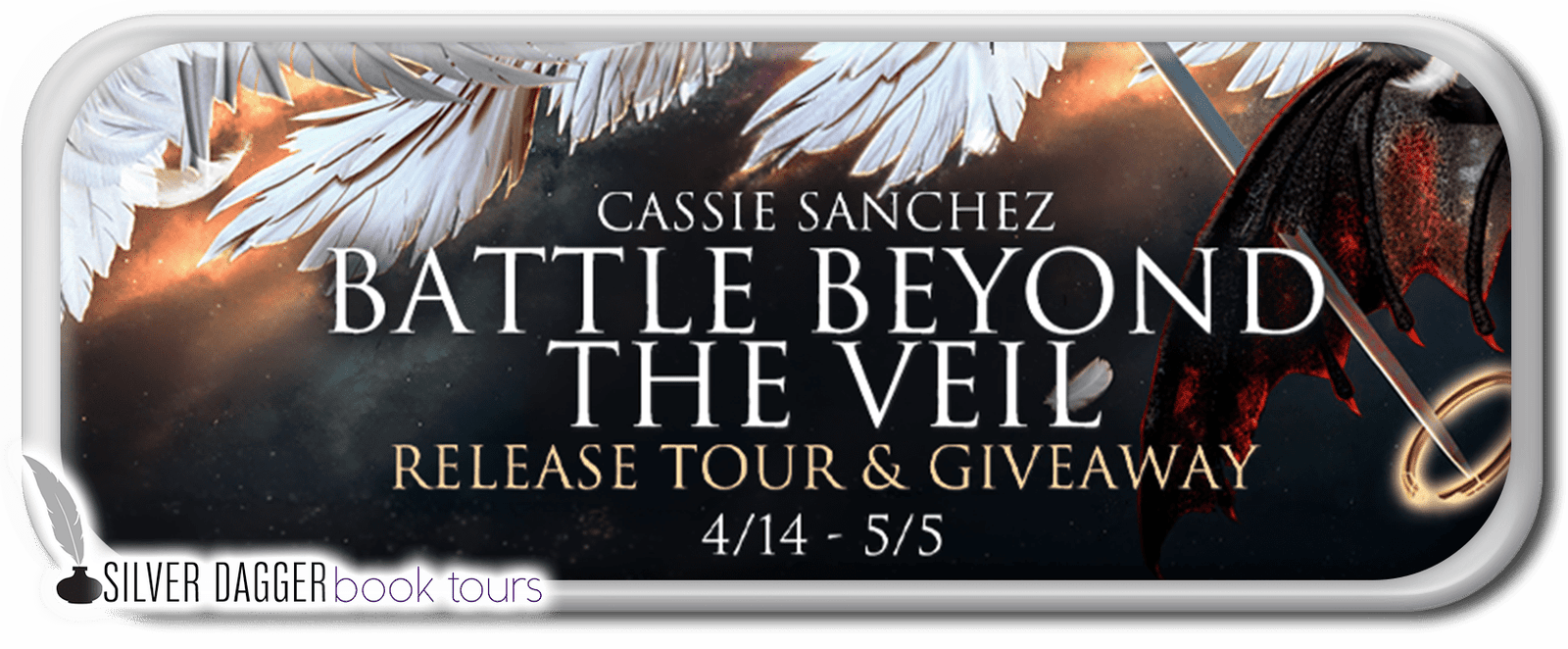
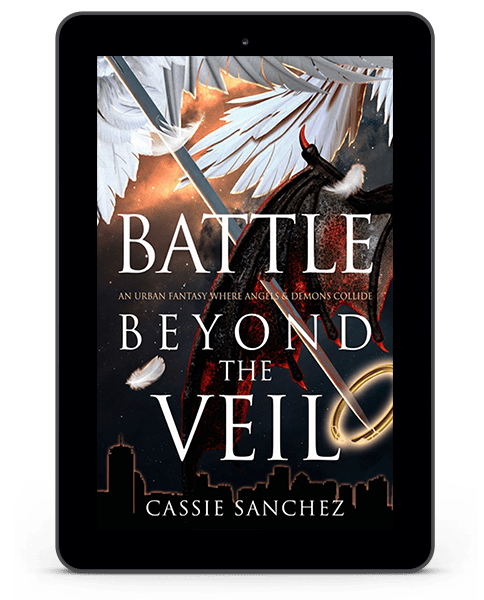
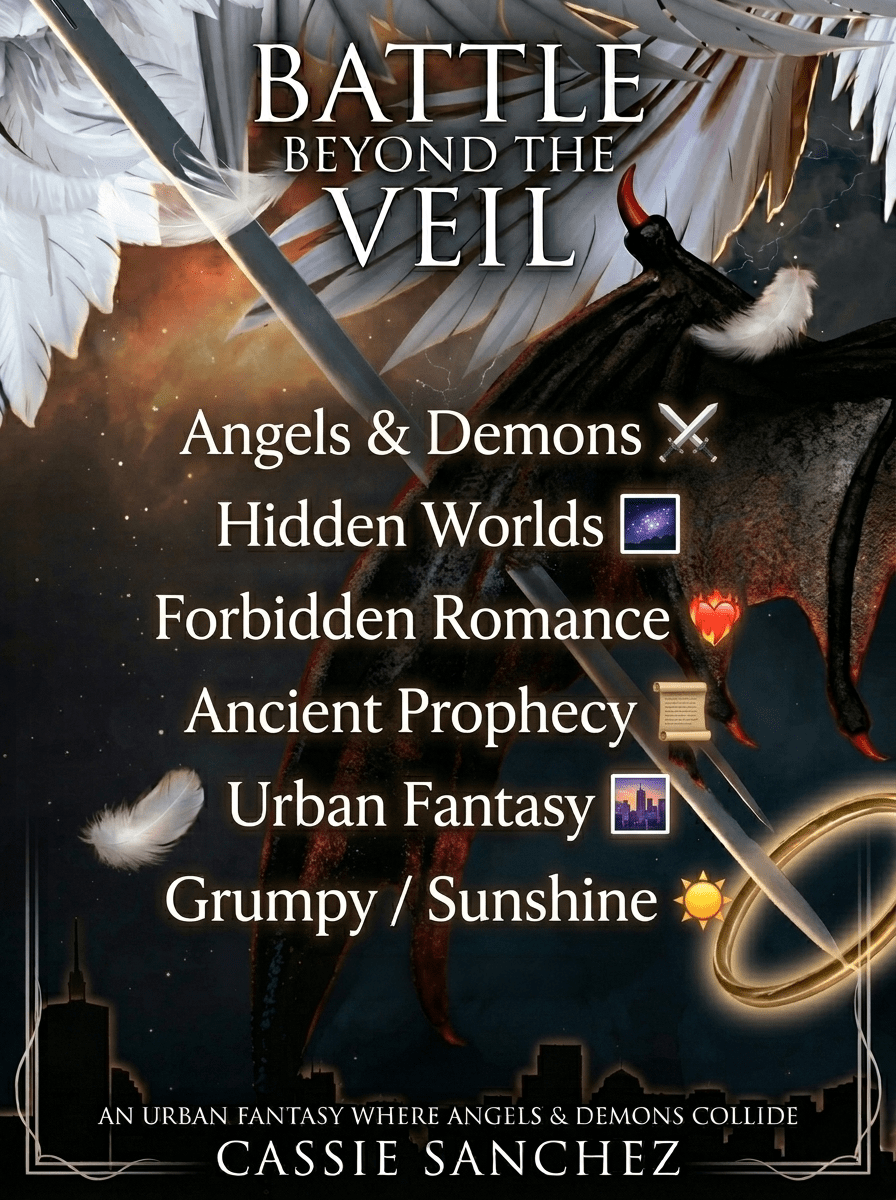
Cassie Sanchez is here to tell us about Battle Beyond the Veil, urban fantasy.
There's also a great giveaway.
_______________________
Two worlds.
One forbidden relic.
A battle for survival or ruin.
Battle Beyond the
Veil
by Cassie Sanchez
Genre: Urban Fantasy
The Celestial War
shattered the Heavens; after millennia, the battle still rages.
On the most important day of Zahra’s career at the Gallery of Time Museum,
everything unravels. A mysterious package arrives from her estranged father,
and the Atar’zul, a relic that could secure her promotion goes missing. While
betrayal festers within the museum, a long lost love returns, throwing Zahra’s
world into chaos.
Kyden, a warrior angel and demon slayer, has guarded the spiritual realm for
centuries. When a famous archaeologist and forbidden artifact vanish, Kyden is
forced to protect a human, a job he vowed long ago to never do again.
Together, Zahra and Kyden must face rising demon threats and the cursed magic
of the Atar’zul. As darkness closes in, they join forces to defend both realms
and find that ending the battle beans trusting each other. Sacrifices must be
made—the cost of which might be their very souls.
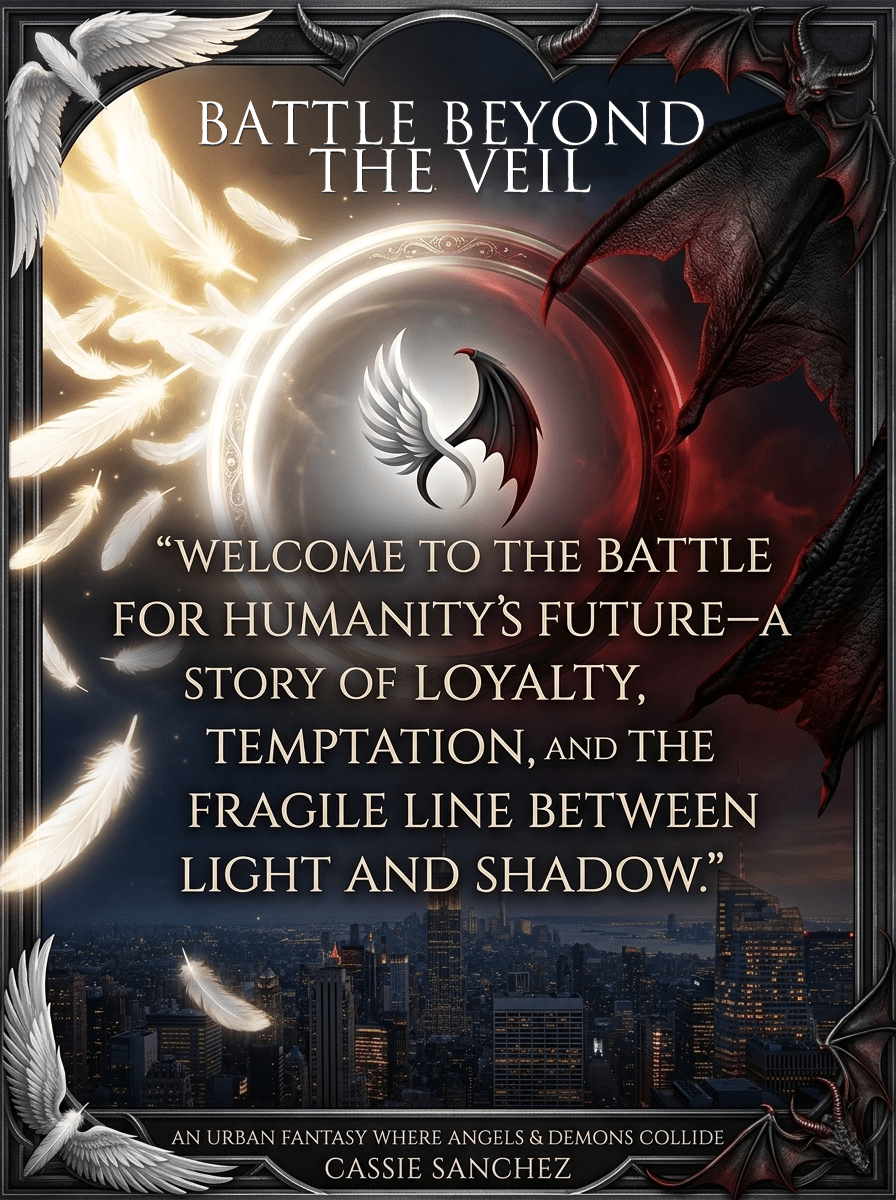
Welcome to the battle for humanity's
future—a story of loyalty, temptation, and the fragile line between light and
shadow.
Cassie Sanchez is the award-winning author behind
the Darkness trilogy—a whirlwind of fast-paced fantasy romance
where danger dances with desire and magic always has a price. Based in the
enchanting Southwest, she lives with her husband and two crazy labs named
Bullet and Scout. When she’s not writing happily-ever-afters, she can be found
wielding a Pickleball paddle or cuddling with her nogs for an afternoon nap.
At the heart of Cassie’s stories are characters who
stumble, fall, and rise again—wrestling with forgiveness and searching for
redemption. Step into her world, where every story casts a spell and love
conquers all, even the shadows.